
Carroll County Criminal Court Records
A criminal court record is the court case file, not the arrest itself. In Carroll County, the Office of Circuit Court Clerk is the local access point for Circuit Court and District Court case files. The record begins once a complaint, citation, information, indictment, or other charging document is filed in court. From there, docket entries, bond orders, motions, plea paperwork, hearings, dispositions, and sentences form the criminal case history.
The court division depends on the charge. Felonies and more serious criminal matters move through Circuit Court after indictment or felony procedure. Misdemeanors, many traffic crimes, and lower criminal matters commonly appear in District Court. The County Attorney generally handles many misdemeanors, violations, traffic-related criminal matters, juvenile matters, and county legal business. The Commonwealth's Attorney handles felony prosecutions and more serious Circuit Court criminal matters.
Office of Circuit Court Clerk
Carroll County Judicial Center
802 Clay Street
Carrollton, KY 41008
502-732-4305
Commonwealth Attorney
Leigh Ann Tomlinson Roberts
P.O. Box 548
Carrollton, KY 41008
502-732-5841
County Attorney
Nick Marsh
115 5th Street
Carrollton, KY 41008
502-732-7009
Search Carroll County Criminal Court Records
The main online route is KYeCourts Public Court Records. Complete the captcha checkbox and continue as a guest. The same guest page separates public case lookup from criminal record reports. A criminal record report for broad background purposes routes to AOC Background Checks, while a Carroll County criminal court record search is case-specific.
- Identify whether the case is likely felony, misdemeanor, traffic-criminal, or another criminal case type.
- Open KYeCourts Public Court Records and continue through the guest captcha path.
- Use the available public case search fields to locate the defendant, case number, court, or case type.
- Check the docket app if the main need is the next hearing date rather than the complete case history.
- Request certified copies from the Circuit Court Clerk when a court-issued copy is needed.
- For older files, follow the KCOJ State Records Center or KDLA process if the case has moved off-site.
Carroll County users should also separate criminal case records from charge-focused and custody-focused records. The filed charges and case outcome belong in the criminal file. The narrower arrest-to-charge path is covered in Carroll County arrest records and court charges, while current custody information belongs with the jail roster.
Carroll County Criminal Case Stages
A criminal court record grows as the case moves through set stages. Not every case reaches trial or sentencing. Some charges are dismissed, amended, reduced, merged, or resolved by plea. Felony matters can begin with District Court events and then move into Circuit Court after indictment or waiver. The docket and case file should be read together because a date entry alone may not show the full ruling or order.
Case flow: Charges Filed › Arraignment › Pretrial / Motions › Plea or Trial › Disposition › Sentencing
| Stage | What Happens |
|---|---|
| Charges filed | A complaint, citation, information, or indictment starts the court case and creates the charge record. |
| Arraignment | The defendant appears, receives advice of rights, and enters or preserves a plea. |
| Pretrial / motions | Attorneys may file motions, negotiate conditions, address bond, request discovery, or set hearings. |
| Plea or trial | The case may resolve by plea agreement or proceed to trial for verdict. |
| Disposition | The court records the outcome for each charge, such as guilty, dismissed, acquitted, or amended. |
| Sentencing | The court imposes jail, prison, probation, fines, costs, restitution, treatment, or other terms when a conviction occurs. |
What Carroll County Criminal Court Records Show
A criminal court record can contain both summary fields and formal documents. Public case information is expected to show the case number, parties, court, division, case type, docket events, hearing dates, and status when public. The full file may include charging papers, bond orders, motions, plea agreements, judgments, sentencing orders, payment records, and notices. Public document download availability was not verified in the guest view during research.
| Field | What It Shows |
|---|---|
| Case number | The identifier assigned by the Kentucky court system. |
| Defendant | The person accused in the criminal case, unless restricted by law or order. |
| Commonwealth | Kentucky as the prosecuting party in criminal matters. |
| Charges | Offense name, statute, level, arresting agency, complaint or citation number, and amended charge data when public. |
| Bond | Bond amount, type, conditions, no-contact terms, and release status if entered in the court record. |
| Docket events | Arraignment, pretrial, motions, continuance, plea, trial, sentencing, show cause, warrant, recall, or dismissal. |
| Disposition | The outcome of each charge, such as guilty, dismissed, amended, acquitted, or merged. |
| Sentence | Jail or prison terms, probation, fines, costs, restitution, treatment conditions, or payment plan details. |
Carroll County Charges vs Convictions
A charge is an accusation. A conviction is a finding or plea that establishes guilt. Carroll County criminal court records can show charges that were filed and later reduced, amended, dismissed, merged, or resolved without conviction. This is why the disposition field matters as much as the initial charge list.
| Charge | Conviction | |
|---|---|---|
| Meaning | A filed accusation after arrest, citation, complaint, information, or indictment. | A guilty plea, verdict, or other qualifying outcome establishing guilt. |
| Record location | Charge list and docket entries in the case file. | Disposition, judgment, plea, and sentence entries. |
| Can change | Yes. It may be amended, reduced, dismissed, or merged. | Yes, but usually through appeal, post-conviction relief, or expungement if eligible. |
| Public meaning | Does not prove guilt. | May carry sentence, probation, costs, or collateral consequences. |
Note: A filed charge in a Carroll County record should not be read as a conviction without checking disposition.
Read Carroll County Criminal Dispositions
The disposition is the outcome line. It tells whether a charge remains pending, was dismissed, resulted in a plea, went to trial, or ended in another final action. A sentence is the punishment or court-ordered term after conviction. The record may include jail or prison time, probation, fines, court costs, restitution, treatment conditions, no-contact terms, or payment-plan status.
- Dismissed with prejudice
- The charge is dismissed and generally cannot be filed again.
- Dismissed without prejudice
- The charge is dismissed but may be refiled if the law allows.
- Plea
- The defendant's formal answer, such as guilty, not guilty, or Alford plea.
- Probation
- Supervised release instead of or after jail or prison.
- Bench warrant
- A warrant often issued by a judge for failure to appear or contempt.
Sealed Carroll County Criminal Records
Sealing and expungement affect whether a criminal court record remains visible through public search. Juvenile records are restricted by law. Adoption and many mental-health materials are confidential. Expunged matters do not appear like ordinary adult criminal cases after a valid order. Redactions may also remove Social Security numbers, account data, protected addresses, minor names, medical details, and sealed material from public copies.
| Sealed | Expunged | |
|---|---|---|
| Public visibility | Hidden from ordinary public access by law or court order. | Removed from ordinary public court and criminal-history access after a granted order. |
| How it happens | By statute, court rule, or judge's order for protected matters. | By petition under the correct Kentucky expungement track. |
| Examples | Juvenile, adoption, mental health, and safety-related materials. | Eligible felony convictions, eligible misdemeanors, violations, dismissals, acquittals, or non-indictments. |
| Still available to some agencies | May be accessible to parties, attorneys, agencies, or court-authorized persons. | Limited nonpublic access may remain where Kentucky law allows. |
Kentucky State Police certification is part of many conviction expungement petitions. The Kentucky State Police expungement certification source explains that route.

Dismissed, acquitted, and non-indictment cases may follow a different expungement path than conviction cases, so the statute and court form must match the outcome.
Public Access to Carroll County Criminal Records
Kentucky's Open Records Act, KRS 61.870 to 61.884, supports access to many public-agency records, but court case records follow Kentucky Court of Justice rules and case-access processes. Criminal case files are generally public unless sealed, expunged, juvenile, confidential by law, or redacted for protected information. AOC administrative records are requested through a separate open-records email and should not be confused with criminal case files.
Several Kentucky statutes matter when reading Carroll County criminal court records. KRS 431.073 covers certain felony conviction expungement. KRS 431.078 covers certain misdemeanor and violation conviction expungement. KRS 431.076 covers acquittals, dismissals, and felony charges not resulting in indictment. KRS 610.340 restricts juvenile court records. Each rule affects whether the public can see a record, how a person may seek relief, and what remains visible after the court acts.
The Kentucky Revised Statutes lookup source is the statewide statute reference for expungement and access limits.
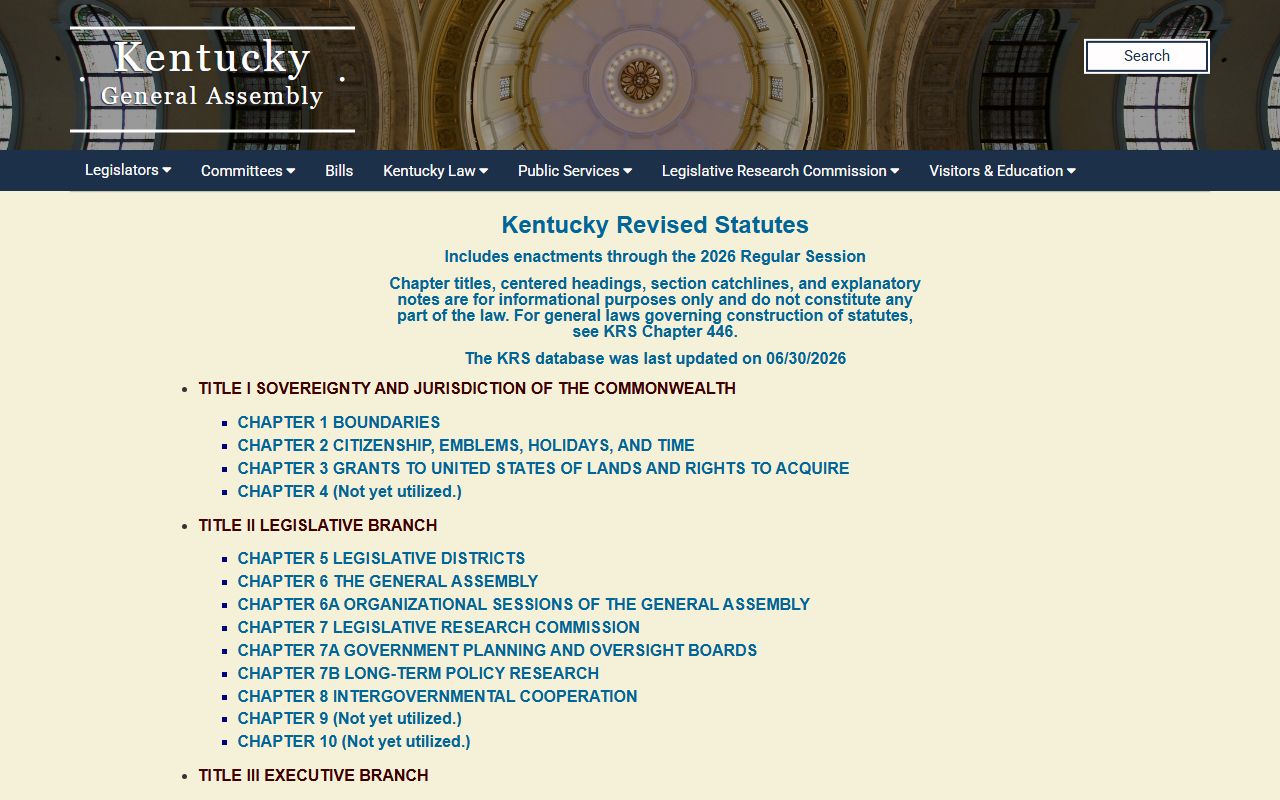
The statute portal is the place to verify the current wording before relying on an expungement, juvenile confidentiality, or public-record rule.
Criminal Reports and Case Files
AOC criminal record reports are not the same as Carroll County criminal court records. A report may be used for statewide criminal-history purposes, while a case file explains what happened in a specific court matter. KYeCourts guest access points users to AOC Background Checks when they need a criminal record report rather than public case lookup. Questions about incorrect or incomplete criminal-history records may require the AOC Records Unit or the local Circuit Court Clerk.
Important: Do not use informal Carroll County criminal court searches for FCRA-regulated screening decisions.
Restricted Carroll County Criminal Records
Public criminal access narrows when a case involves a juvenile, sealed order, expungement, mental-health matter, protected victim information, minor names, or confidential addresses. Search warrants and active investigations may also be sealed or withheld while the matter remains sensitive. Court users should expect some docket events, documents, or identifiers to be redacted even when the case itself is visible.
A Carroll-specific public defender office address was not located in official sources. A person who cannot afford counsel should ask the arraignment judge, Circuit Court Clerk, jail staff, or pretrial staff how to request Department of Public Advocacy representation. That gap should not be filled with private attorney listings or nonofficial legal-aid assumptions.